Bite-size faith insights for our BECs
What is the special significance of Our Lady of the Pillar to the Parish of St. James the Great?
The significance of Our Lady of the Pillar (Nuestra Señora del Pilar) to the Parish of St. James the Great lies in a profound, foundational link rooted in Christian tradition and the shared history of the two patronages.
1. The Direct Historical Bond Between St. James and Our Lady of the Pillar
According to pious tradition dating back to 40 A.D., the Apostle St. James the Great (Santiago) was struggling immensely and feeling deeply discouraged while trying to evangelize the people of Caesaraugusta (modern-day Zaragoza, Spain).
During a night of prayer by the banks of the Ebro River, the Blessed Virgin Mary—who was still living in mortal flesh in Jerusalem at the time—miraculously appeared to him. She appeared standing on a pillar of jasper, accompanied by angels, to comfort him and give him strength. She instructed St. James to build a chapel on that exact site, promising that “it will stand from that moment until the end of time in order that God may work miracles and wonders through my intercession.”
St. James fulfilled this request, building the very first church dedicated to Mary in Christian history. Because of this miraculous event, Our Lady of the Pillar and St. James are inextricably linked as companions in mission, faith, and perseverance.
2. Patronage of Spain and Spanish Heritage.
Because the apparition occurred in Spain and spurred the Christianization of the Iberian Peninsula, Our Lady of the Pillar became the Patroness of Spain and the Hispanic world. Given that St. James (Santiago) is likewise the historic patron saint of Spain, churches dedicated to St. James frequently honor Our Lady of the Pillar as a vital companion devotion, celebrating their shared historical roots tied to early Spanish Catholic heritage.
3. Spiritual Reflection in the Parish
For a parish placed under the patronage of St. James the Great, invoking or recognizing Our Lady of the Pillar honors the profound turning point in the saint’s life—transforming a moment of isolation and despair into one of immense apostolic success through Mary’s maternal encouragement. It serves as a reminder of resilience in faith, divine guidance during difficult missions, and the deep-seated Marian devotion embedded in the historical legacy of St. James.
Who are the Archangels?
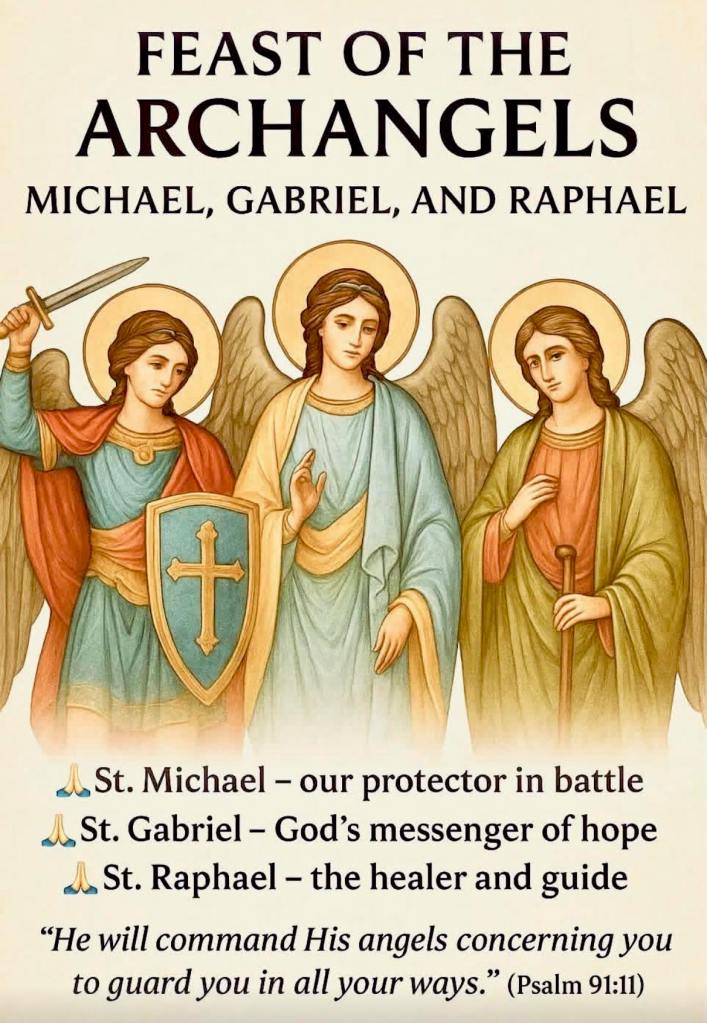
On September 29, the Church celebrates the Feast of Saints Michael, Gabriel, and Raphael, Archangels.
The Meaning of the Feast
The feast honors the three archangels explicitly named in Sacred Scripture, each embodying a unique dimension of God’s interaction with humanity:
- Saint Michael (“Who is like God?”): The warrior and protector who leads the heavenly host against the forces of evil. He represents spiritual strength, defense against temptation, and fidelity to God’s sovereignty.
- Saint Gabriel (“God is my strength” or Messenger of God): The heavenly messenger entrusted with announcing pivotal moments in salvation history, most notably the Incarnation to the Blessed Virgin Mary. He symbolizes divine communication, clarity, and God’s promptings in our lives.
- Saint Raphael (“God heals”): The divine healer and companion from the Book of Tobit, who guides travelers, brings physical and spiritual healing, and restores sight to the blind.
Theological and Spiritual Significance
- We Are Never Alone: The primary takeaway of the feast is the comforting reminder that the invisible world is active. God assigns these heavenly spirits to guard, guide, and assist humanity on our earthly pilgrimage.
- The Reality of Spiritual Warfare: Through Saint Michael, the feast acknowledges that the Christian life involves a daily struggle against moral and spiritual darkness, but reassures us that the ultimate victory belongs to God.
- God’s Providence and Care: Honoring angels does not mean worshiping them; rather, it directs our praise to the Creator who supplies messengers of protection (Michael), revelation (Gabriel), and healing (Raphael) to sustain us.
How To Explain the Trinity
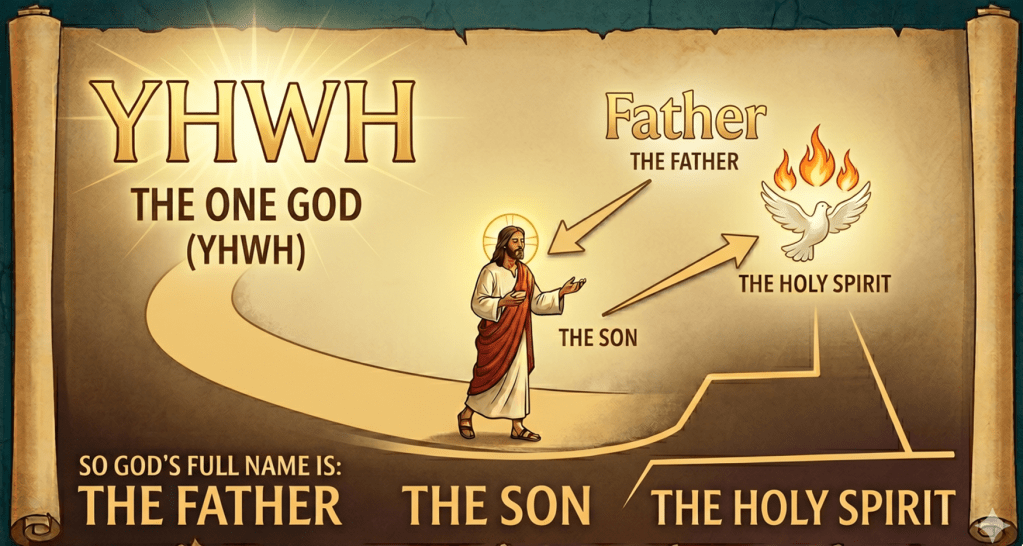
The mystery of the Holy Trinity is the most fundamental and essential teaching in the “hierarchy of the truths of faith” (CCC 234).
Yet very few Catholics can actually explain the Trinity. How would you explain this mystery to a Muslim, for example? When asked, our response is usually “it means there are three persons in one God.” When probed what exactly that means, we are likely to say “I can’t really explain that, that’s why it’s a mystery.”
I found the approach of Bishop Teodoro Bacani from his book entitled From Yahweh to the Trinity (Manila: Gift of God Publications, undated), as very helpful in explaining the Trinity.
First, Bishop Bacani asks, how does God reveal himself?
Answer: God first revealed himself as Yahweh.
Very early in the bible, there was a point when God communicated to men and women the name by which he wanted to be known: Yahweh. It means “I am who am.” Biblical scholars who study the nuances of language believe that the more accurate translation of Yahweh is “I am who will show myself to be by the actions, which I will do on your behalf.” This translation suggests two things:
- God wants to be known progressively, not in a one time kind revelation. This means that the God of the Old Testament must be known also through what is revealed by God in the New Testament.
- Secondly, the translation suggests that God will be known by the actions that he will do for his people.
What do we know about who God is and the nature of God based on the actions that God has done?
- God liberates the Jews from slavery.
- However, the Israelites frequently disobeyed and turned away from Yahweh many times in their history as a nation. But despite all these, Yahweh never gave up on them.
Through these actions, Yahweh became known not just as a powerful God, but a God “abounding in steadfast love and faithfulness.” His justice is tempered with mercy.
Then, one day Yahweh did the most unexpected and undreamed of action of all time. Yahweh no longer spoke through signs, but through a Son, Jesus of Nazareth.
What did the words and actions of Jesus reveal about who God is?
In his ministry, Jesus speaks of Yahweh in a very unusual way. He calls Yahweh: “Father.” This is a radical idea since this invokes an intimate relationship with God, something akin to the relationship of father and child, and not king and subjects as the Jews were used to.
Jesus also reveals the Spirit of God. He promises the Spirit to his disciples at the Last Supper, saying that the Father will send him, and that he (Jesus) himself will send him (John 14:16-17, 25; 15:26; 16:7-14). And in Pentecost, there is the outpouring of the Spirit to Mary and the disciples gathered in the upper room.
Through the words and actions of Jesus, the name of God has changed. It is no longer “Yahweh.” After God becomes man in the person of Jesus, and the sending of the Holy Spirit in Pentecost, God’s name is now: “Father, Son and Holy Spirit.”
So what is the Holy Trinity?
Through his actions and words, we now know that God has a Son, who was with him in the beginning, and who is God like him. It is this Son who became flesh and lived among us. God does not only have a Son, but is also a Spirit. This Spirit is the one who pours out the love of God into our hearts (Romans 5:5).
Can you tell us more about the Holy Spirit?
This Spirit is not the Father nor the Son but is sent by them both not as another spirit like an angel, but as their common Spirit, and thus God like them.
The Spirit is first of all, a spirit and is a person. He does not have a material body, and yet he is Someone. He is someone who performs spiritual functions, acts of the intellect, for example. Christ said that the Spirit would lead the disciples to all the truth (John 16:12), that the Spirit would also bear witness regarding him (John 15:26), and would speak for the disciples when they faced the tribunals (Matthew 10:19-20).
The Holy Spirit is Love in Person. It is because he is Love in person that the Holy Spirit can pour forth into our hearts the love of God when he is given as gift to us. (Romans 5:5)
So God changed his name from Yahweh to the Holy Trinity?
Yes, the name of God is now Father, Son and Holy Spirit. It is in that name we are baptized. We enter into the life of one God-Community of Persons.
In other words, the one God really exists as Father, Son and Holy Spirit. From all eternity God is a Trinity of Persons, but this truth was revealed only through the sending of Jesus Christ and of the Holy Spirit. So in God, there is one What and three Who’s.
Why is Pentecost Considered the Birthday of our Church?
Watch it here:
What Happened on Ascension?
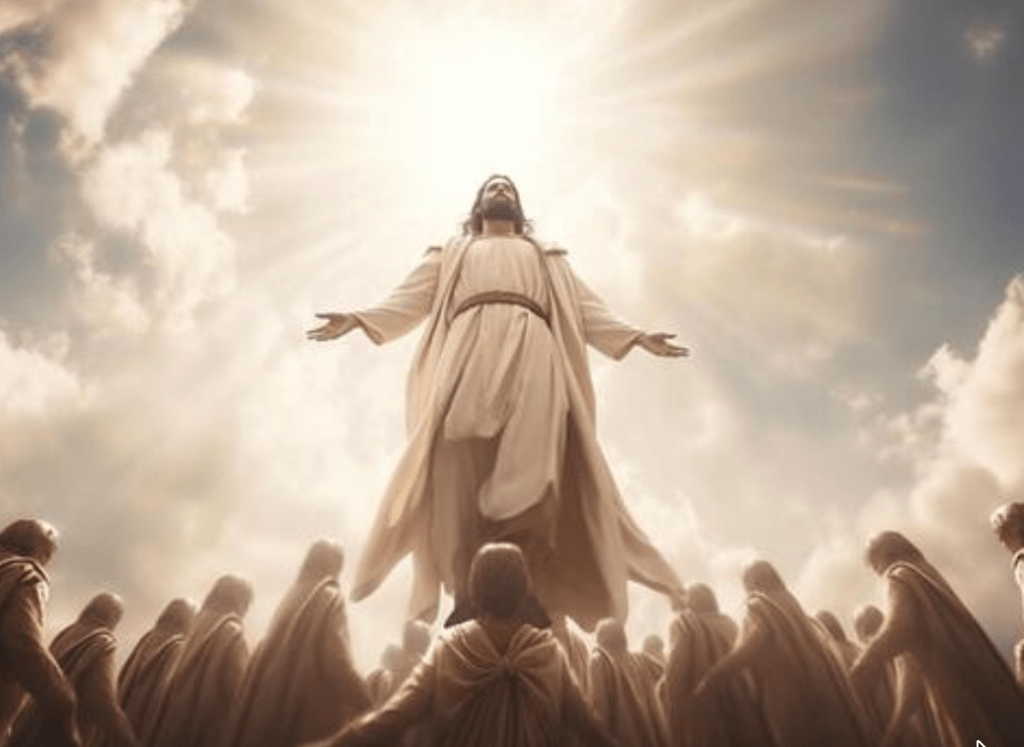
On Ascension Sunday, we celebrate the moment Jesus moved from being a local to a global presence.
What happened and what does it mean?
Historically, forty days after the Resurrection, Jesus led His followers to the Mount of Olives. To the disciples, this was a bittersweet goodbye; they saw Him physically “lifted up” until a cloud of God’s glory hid Him from their sight.
In the ancient world, “lifting up” means a Coronation. Just as a king “ascends” to his throne, Jesus was officially taking His seat at the “Right Hand of the Father.” Note that Jesus didn’t leave His humanity behind. He brought our human nature—His scars and His human heart—into the very life of God, bridging the gap between Heaven and Earth forever.
The Final Blessing
When they reached the summit, Jesus didn’t just drift away; He performed a final, intentional act. He lifted His hands and began to bless them. In the tradition of the People of God, this was the gesture of the High Priest finishing his service. As He was being “lifted up,” those hands remained raised over them. This is the first great significance: Jesus didn’t “leave” us; He entered a state of permanent blessing.
The Great Exchange: Local to Global
Before this day, Jesus was a “local” Savior. If you wanted to hear Him, you had to travel to Judea and find Him in a specific house or boat. He was limited by a physical body that could only be in one place at a time.
By stepping into God’s dimension, Jesus became Global. He left our sight so He could be available to every person, in every country, at every moment. He is now just as present in a small BEC meeting in our neighborhood as He is in the greatest cathedral in the world.
The Inner Miracle: From Beside to Within
During His time on earth, Jesus walked beside His disciples as their teacher. By ascending, He was able to send the Holy Spirit to us. This shifted His location: He moved from being a person standing beside the disciples to being the divine power living within all of us.
What is an Octave?
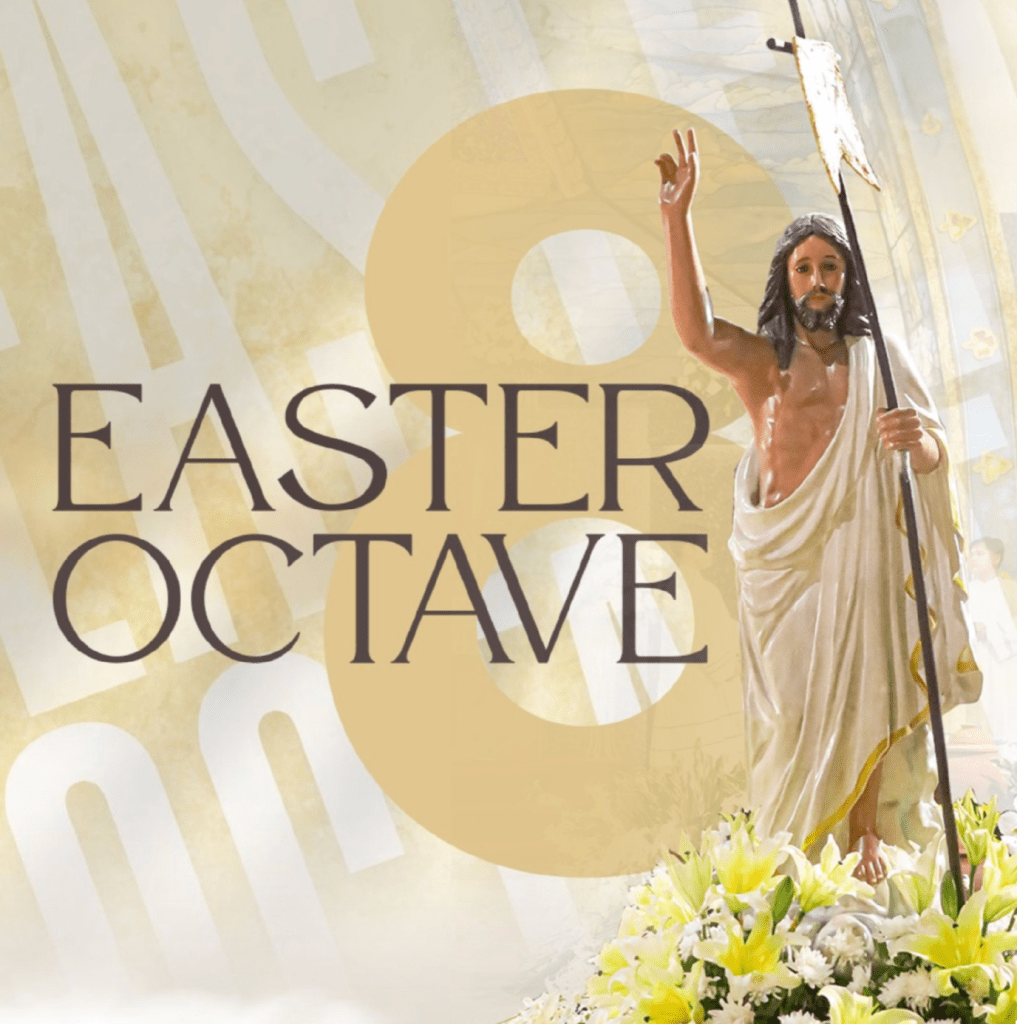
The Easter Octave is the eight-day period starting on Easter Sunday and ending on the Second Sunday of Easter (Divine Mercy Sunday). In the Catholic tradition, these eight days are celebrated as a single, continuous feast day of the Resurrection.
Here is why it is significant:
1. “A Feast of Feasts”
Because the Resurrection is the cornerstone of Christianity, the Church considers one day insufficient to celebrate it. The Octave treats all eight days as Solemnities—the highest rank of liturgical feast. This is why the Gloria is sung and the “double Alleluia” is added to the dismissal at every Mass during the week.
2. The Biblical Symbolism of Eight
In biblical numerology, seven represents the completion of a week (the old creation). The eighth day signifies:
- The New Creation: Christ rose on the day after the Sabbath (the eighth day), signaling a new era for humanity.
- Eternity: It represents a time “beyond” the seven-day week—a foretaste of the eternal life that has no end.
Why St. Peter and St. James are No Longer Included in the Good Friday Procession
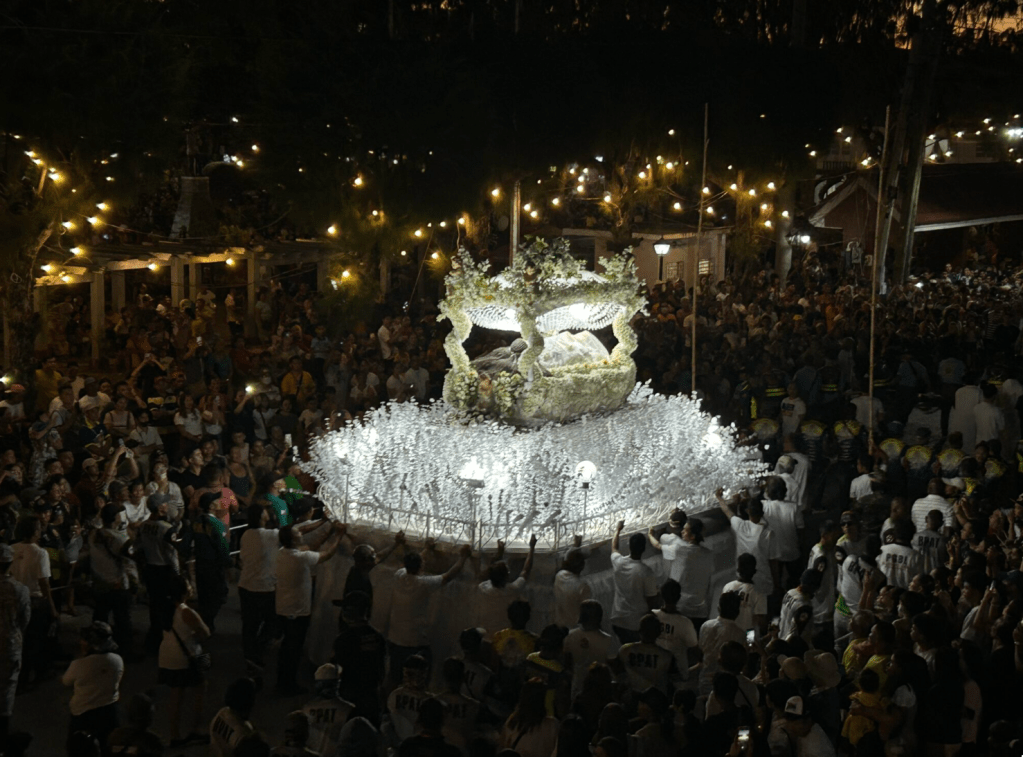
The exclusion of St. Peter and St. James from the Good Friday procession reflects a move toward Scriptural accuracy and liturgical integrity, as encouraged by the Catholic Bishops’ Conference of the Philippines (CBCP).
1. Scriptural Accuracy: The Abandonment
According to the Gospels, when Jesus was arrested in Gethsemane, “all the disciples deserted him and fled” (Matthew 26:56).
- St. Peter followed at a distance but famously denied Jesus three times and went away weeping.
- St. James, like the others, was not recorded as being present at the foot of the Cross.
To remain faithful to the biblical narrative of Calvary, many parishes—following the guidance of the CBCP’s Episcopal Commission on Liturgy —now only include those who remained: St. John the Evangelist, the Blessed Mother, and the holy women.
2. Liturgical Focus: The Solitude of Christ
The Church has shifted toward ensuring processions are a theological narrative rather than just a parade of statues. By removing the Apostles who fled, the procession emphasizes the profound solitude and suffering of Christ, highlighting that He was abandoned by His closest friends during His darkest hour.
Why the Paschal Triduum May Be Considered as the “Longest Mass” in our Church.
The Paschal Triduum is not a series of three separate services; it is one single, continuous liturgical celebration that spans three days. It is the heart of the Church’s year, marking the journey of Jesus from the Last Supper to the Resurrection.
The “Longest Mass” in our Church
While the Church officially calls this the Paschal Triduum, you might find it helpful to think of it as the “longest Mass” in our church. This isn’t a catechetical definition, but a beautiful way to understand that these three days are actually one single day in the eyes of the Church. We begin with the Sign of the Cross on Thursday evening, and we don’t receive the final blessing or hear the words “The Mass is ended” until the end of the Easter Vigil. It is one continuous prayer that follows Jesus from the Table to the Tomb.
The Unbroken Chain
The evidence of this “single prayer” is found in the unique way the services flow into one another:
- Holy Thursday: The Mass of the Lord’s Supper ends with no dismissal. We depart in silence, as the liturgy is “on pause.”
- Good Friday: The Celebration of the Passion begins with no greeting. There is no “In the name of the Father…” because the prayer started the night before. It also ends without a blessing.
- The Easter Vigil: Only at the conclusion of the Saturday night Vigil does the priest finally say, “The Mass is ended,” providing the formal blessing for the first time since Thursday.
What is significance of the donkey and palms when Jesus entered Jerusalem?
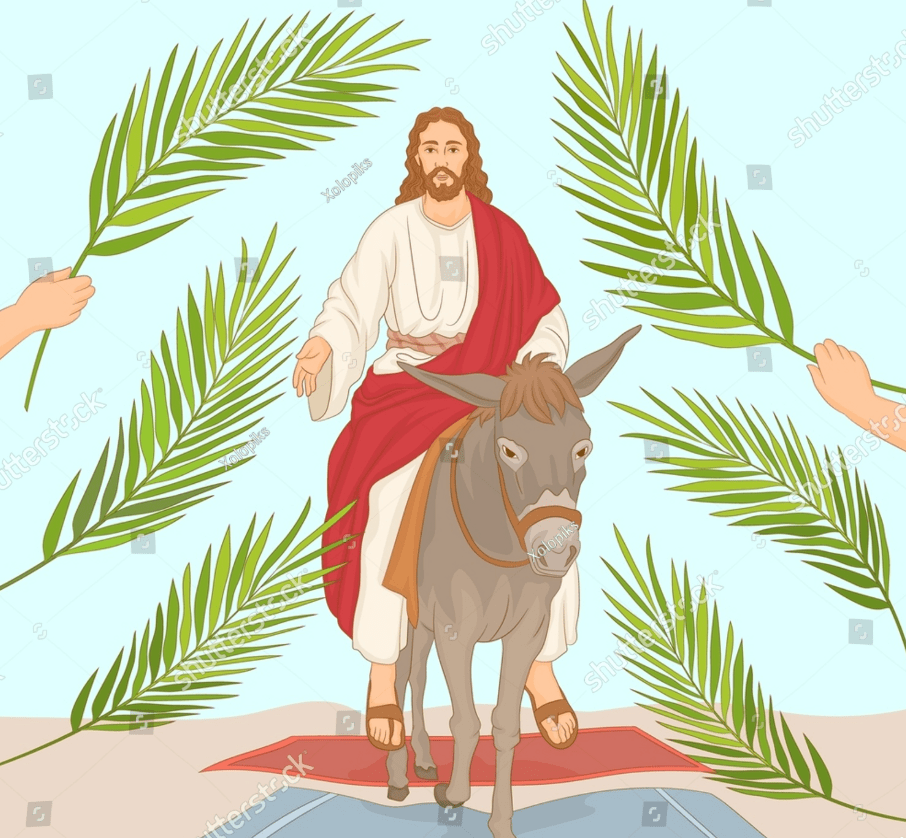
Palm Sunday marks the beginning of Holy Week, serving as a powerful bridge between the glory of Jesus’ entry into Jerusalem and the solemnity of his Passion.
Here are its primary theological themes:
1. The Humility of the Messiah
The choice of a donkey rather than a horse is a deliberate theological statement. While a horse symbolized war and conquest, the donkey symbolized peace and humility.
It defines Christ’s kingship not through military might, but through servant leadership and peace.
2. The Recognition of Kingship
The spreading of cloaks and palm branches was a traditional act of homage for a victorious king (similar to the reception of Jehu in 2 Kings 9:13). By doing this, the crowds were publicly declaring Jesus as the “Son of David,” the long-awaited Messianic heir.
3. The “Hosanna” Cry
The word Hosanna translates to “Save us, we pray” or “Save now.”
- The crowds likely meant political salvation from Roman occupation.
- Theologically, Jesus was entering Jerusalem to offer a much deeper, eternal salvation from sin and death.
4. The Irony of the Passion
Theology often highlights the “Great Irony” of Palm Sunday. The same voices shouting “Hosanna!” on Sunday would, by Friday, be shouting “Crucify him!”
Who is St. Sharbel Makhlouf?
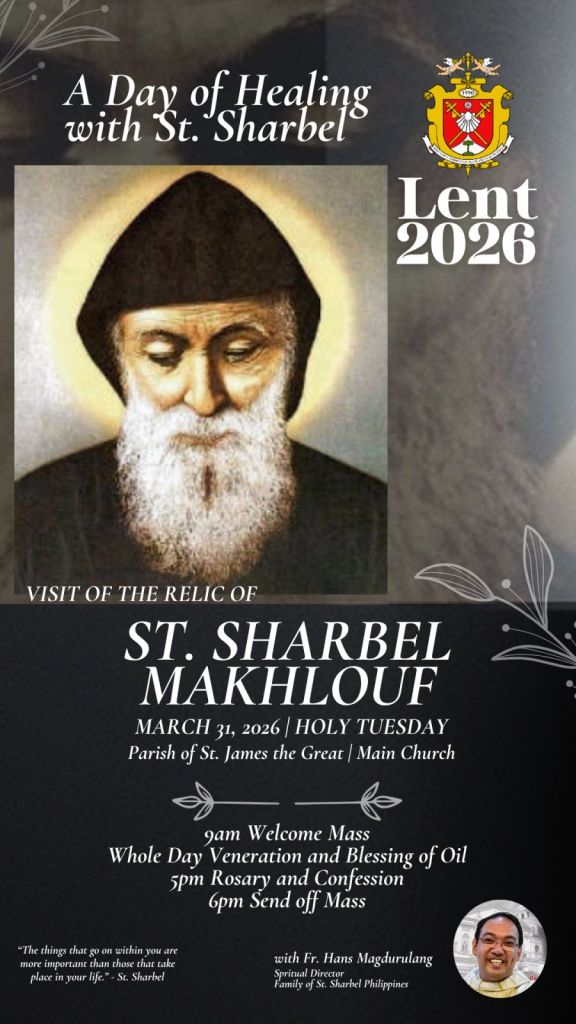
St. Sharbel Makhlouf, also known as St. Charbel, was a Lebanese Maronite monk, priest, and hermit who lived a life of deep prayer, silence, poverty, and total surrender to God.
Born Youssef Makhlouf in 1828, he entered monastic life, was ordained a priest, and later spent the last 23 years of his life as a hermit in Annaya, Lebanon, where he was known for his holiness and devotion to the Eucharist.
After his death in 1898, people began reporting extraordinary signs of God’s power through his intercession, and he became widely known as the “Miracle Monk of Lebanon”.
His canonization in 1977 by Pope Paul VI came after the Church recognized miracles attributed to his intercession, including healings of seriously ill people.
The most famous healing associated with him is that of Nohad El Shami, who was reportedly healed from partial paralysis after praying through St. Charbel’s intercession. Other reported healings before and after his canonization include cases of paralysis, blindness, cancer, and other serious illnesses, which helped spread devotion to him around the world.
Because of these signs, many faithful see St. Sharbel as a powerful intercessor who continues to bring people closer to God through healing and hope.
St. Joseph
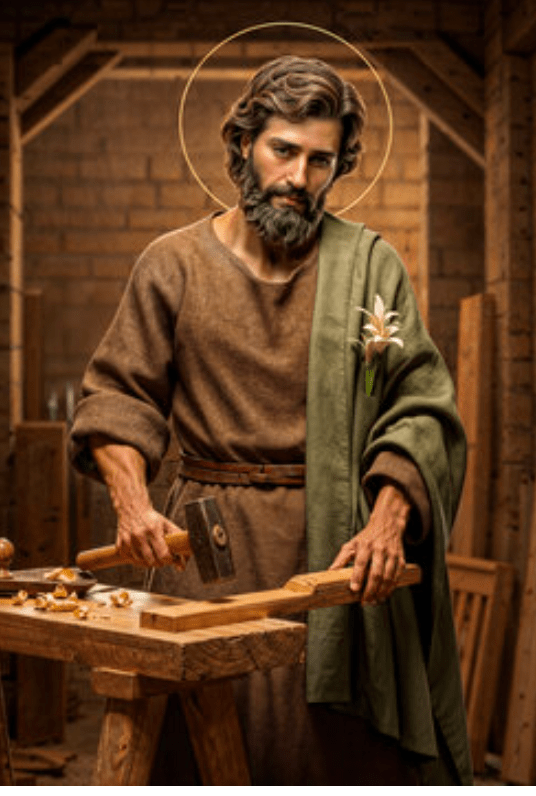
What do we historically know about St. Joseph
Historically, we know surprisingly little about St. Joseph with certainty; almost everything comes from the infancy narratives of Matthew and Luke, and later tradition fills in many gaps with devotional rather than strictly historical material.[1][2]
What the New Testament Actually Says
The only reliable ancient sources for Joseph are the canonical Gospels, and even there he appears only in Matthew 1–2, Luke 1–2, and one scene in Luke 4.[2][1]
– Joseph is presented as a 1st‑century Jewish man living in Nazareth, betrothed and then married to Mary.[1][2]
– He is described as a “just” or “righteous” man, which implies a faithful, law‑observant Israelite who responds to God’s will with obedience.[3][4]
– Both Matthew and Luke present him as a descendant of David, but their genealogies trace different lines (Matthew through Solomon, Luke through Nathan), so the exact family tree is debated.[2][1]
– Matthew highlights Joseph’s dreams: he accepts Mary after the angel’s message, names Jesus, flees with the family to Egypt, and then brings them back to settle in Nazareth.[5][1]
– After the episode of the 12‑year‑old Jesus in the temple (Luke 2:41–52), Joseph disappears from the narrative; he is not mentioned in Jesus’ public ministry, which has led many to infer he died before Jesus’ adult life.[1][2]
Historical context and likely life situation
While details are sparse, scholars can say some historically plausible things about Joseph’s social world.[5][1]
– Joseph is called a “tekton” (traditionally “carpenter”), a term that can mean woodworker, builder, or craftsman in stone and wood, suggesting a manual tradesman rather than a land‑owning farmer.[1]
– Nazareth in his time was a small village in Galilee, close to Sepphoris, a city that was destroyed and rebuilt around 4 BC; some historians think Joseph (and perhaps Jesus later) may have found work there on construction projects.[5][1]
– As a devout Jew, Joseph would have lived within the rhythm of synagogue life, Torah observance, and pilgrimage feasts, as reflected in Luke’s mention of the Holy Family going up yearly to Jerusalem for Passover.[5][1]
Development of devotion to St. Joseph
– From the 15th century onward, figures like Bernardine of Siena and theologians such as Jean Gerson strongly promoted devotion to Joseph and reflected on his role in the Incarnation.[6][1]
– In 1870, Pope Pius IX declared St. Joseph “Patron of the Universal Church”, and subsequent popes, including Leo XIII and John Paul II (*Redemptoris Custos*), deepened theological reflection and encouraged devotion.[10][11][6]
This means that the strong, universal cult of St. Joseph as we know it today is a relatively late development in Church history, built on a very small biblical foundation.[10][9][1]
Footnotes:
[1] Saint Joseph https://en.wikipedia.org/wiki/Saint_Joseph
[2] Saint Joseph – Life, Facts & Mary https://www.biography.com/religious-figure/saint-joseph
[3] Saint Joseph, Husband of Mary https://www.franciscanmedia.org/saint-of-the-day/saint-joseph-husband-of-mary/
[4] Living Space Saint Joseph, Spouse of the Blessed Virgin Mary … https://livingspace.sacredspace.ie/f0319r/
[5] The Hidden Life and History of St. Joseph | Church Life Journal https://churchlifejournal.nd.edu/articles/the-hidden-life-and-history-of-st-joseph/
[6] CATHOLIC ENCYCLOPEDIA: St. Joseph https://www.newadvent.org/cathen/08504a.htm
[7] What is the Catholic source for the story of St. Joseph … https://www.reddit.com/r/Catholicism/comments/1mgogtk/what_is_the_catholic_source_for_the_story_of_st/
[8] Saint Joseph | Husband of Mary & Foster Father of Jesus https://www.catholic.com/tract/saint-joseph-husband-of-mary-foster-father-of-jesus
[9] St. Joseph | Biography, Holy Family, Tradition, Scripture, & … https://www.britannica.com/biography/Saint-Joseph
[10] A History of Devotion to St Joseph | Catholic Truth Society https://www.ctsbooks.org/a-history-of-devotion-to-st-joseph/
[11] The often silent and surprising history of devotion to Saint … https://www.catholicworldreport.com/2025/05/01/the-often-silent-and-surprising-history-of-devotion-to-saint-joseph/
[12] Joseph, the Husband of Mary – Life, Hope & Truth https://lifehopeandtruth.com/change/faith/men-of-faith/joseph-husband-of-mary/
[13] The often silent and surprising history of devotion to Saint Joseph https://www.catholicworldreport.com/2023/03/20/the-often-silent-and-surprising-history-of-devotion-to-saint-joseph/
[14] 10 Facts about St. Joseph in Honor of his Feast Day https://www.sju.edu/news/10-facts-about-st-joseph-honor-his-feast-day
[15] Saint Joseph, Husband of the Blessed Virgin Mary February 21 … https://www.facebook.com/BMSNCebu/posts/saint-of-the-day-saint-joseph-husband-of-the-blessed-virgin-maryfebruary-21-2025/1081560700678879/
The Feast of Jesus Nazareno, or Traslacion
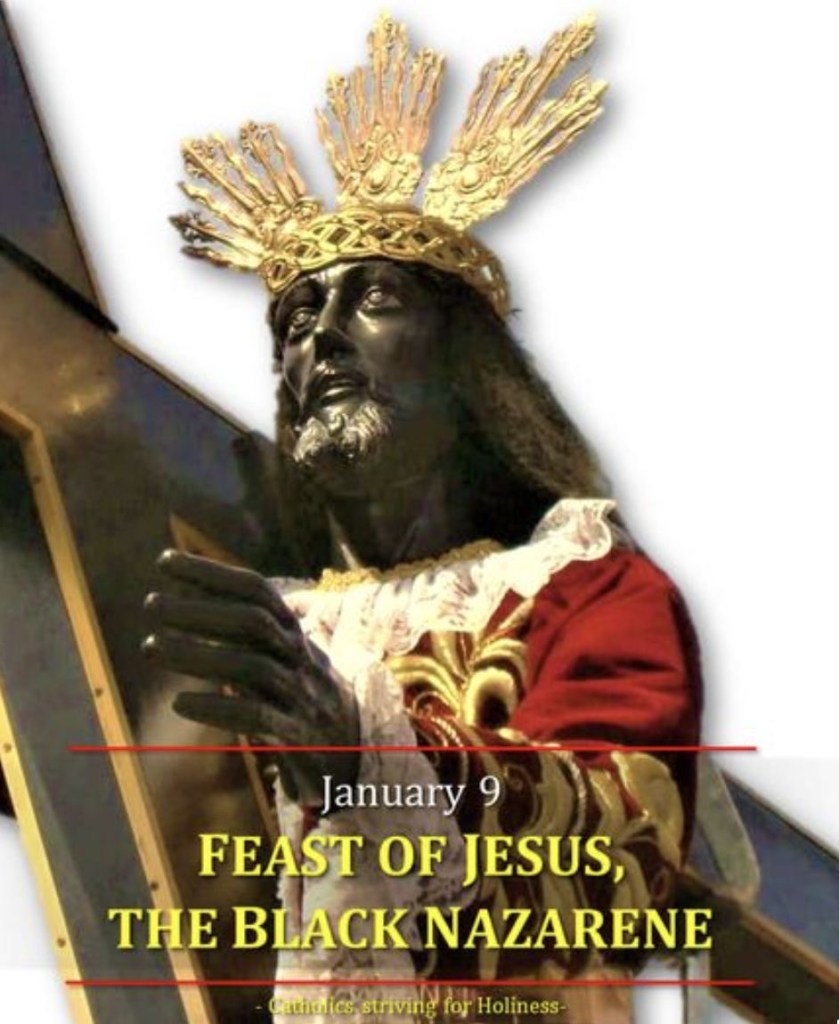
*’Traslacion’* comes from Spanish and means ‘transfer’.
The feast is celebrated on Jan 9, and commemorates the transfer of the image of Jesus Nazareno from its old Intramuros Church to Quiapo Church.
The day begins with Mass at the Quirino grandstand followed by a long procession back to Quiapo Church.
Devotees, many in maroon and yellow, and often barefoot, crowd around the andas to touch the rope or the image as a form of panata, penance or plea for healing and blessings.*
*The image is a dark skinned, cross bearing Jesus symbolizing Jesus suffering on the way to Calvary.*
The dark color and Filipino-like features help devotees feel that Jesus is close to them and shares their struggles, and deepens faith connection.*
*The devotion is centered not only in the statue but on following Jesus Nazareno, and trusting Him to be present in the hardship of daily life.*

