
4th Sunday of Easter – Good Shepherd Sunday April 26, 2026
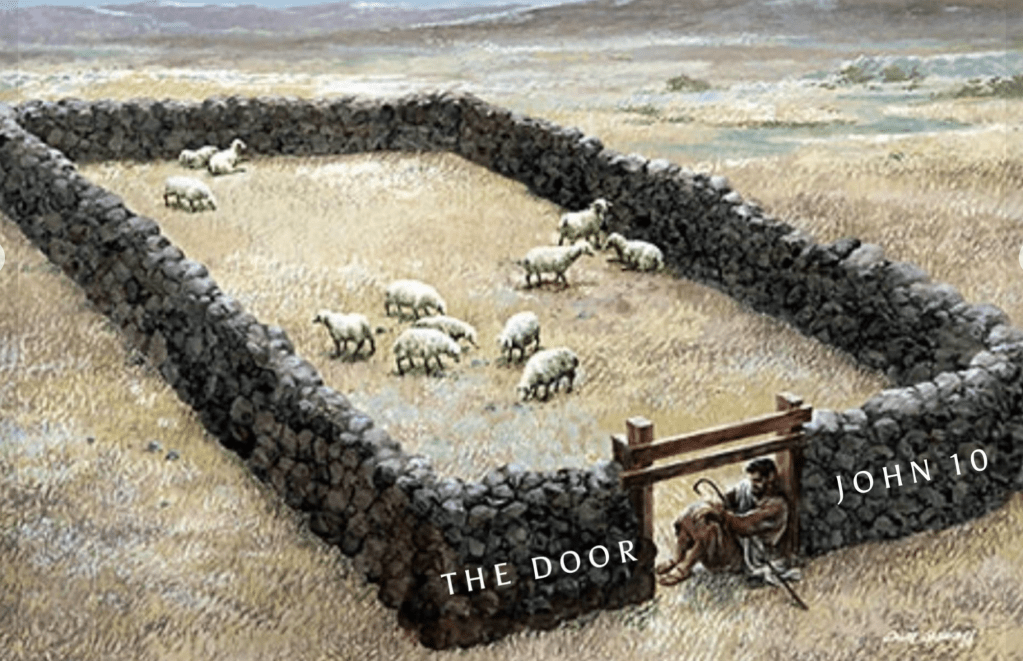
Gospel: John 10:1-10
“Truly, truly I say to you, the one who does not enter by the door into the fold of the sheep, but climbs up some other way, he is a thief and a robber. 2 But the one who enters by the door is a shepherd of the sheep. 3 To him the doorkeeper opens, and the sheep listen to his voice, and he calls his own sheep by name and leads them out. 4 When he puts all his own sheep outside, he goes ahead of them, and the sheep follow him because they know his voice. 5 However, a stranger they simply will not follow, but will flee from him, because they do not know the voice of strangers.” 6 Jesus told them this figure of speech, but they did not understand what the things which He was saying to them [a]meant.
7 So Jesus said to them again, “Truly, truly I say to you, I am the door of the sheep. 8 All those who came before Me are thieves and robbers, but the sheep did not listen to them. 9 I am the door; if anyone enters through Me, he will be saved, and will go in and out and find pasture. 10 The thief comes only to steal and kill and destroy; I came so that they would have life, and [b]have it abundantly.
Gospel Commentary:
In John 10:1-10, Jesus defines the Good Shepherd not just by his title, but by his relationship and actions toward the flock. Here are the core characteristics highlighted in this passage:
Characteristics of the Good Shepherd:
- Intimacy: He calls his own sheep by name. This implies a deep, individual knowledge of each person. He is not a distant manager but a personal guide.
- Leadership through Presence: He does not drive the sheep from behind with a whip; he walks ahead of them. He leads by example, taking the first risks and scouting the path.
- Trustworthy Voice: His sheep follow him because they know his voice. His leadership is built on a history of consistent care, making his commands recognizable as a source of safety rather than fear.
- Sacrificial Protection: As the “Door,” he places himself between the sheep and danger. He is the barrier that keeps the “thief” out and the provider who ensures the sheep find “pasture.”
Reflection Questions:
For Personal Reflection
In the “noise” of your daily life (social media, work pressure, or inner anxiety), what specific habits help you tune your ear to recognize the Shepherd’s voice over the “voice of a stranger”?
For Basic Ecclesial Communities (BECs)
If our community is meant to mirror the Good Shepherd, how are we doing at “calling members by name” and leading by example rather than by “casting out” those who are struggling?


Leave a Reply