
The Sending of the Disciples (11th Sunday of Ordinary Time), June 14, 2026
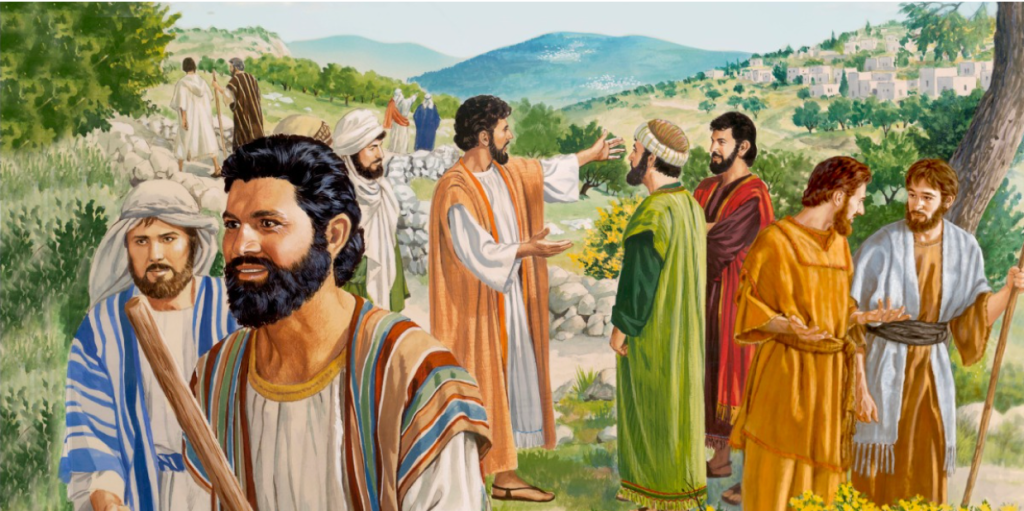
Gospel: Matthew 9:36 – 10:8
36 Seeing the crowds, He felt compassion for them, because they were [a]distressed and downcast, like sheep [b]without a shepherd. 37 Then He *said to His disciples, “The harvest is plentiful, but the workers are few. 38 Therefore, plead with the Lord of the harvest to send out workers into His harvest.”
10 Jesus summoned His twelve disciples and gave them authority over unclean spirits, to cast them out, and to heal every disease and every sickness.
2 Now the names of the twelve apostles are these: The first, Simon, who is called Peter, and his brother Andrew; and [c]James the son of Zebedee, and his brother [d]John; 3 Philip and [e]Bartholomew; Thomas and Matthew the tax collector; [f]James the son of Alphaeus, and Thaddaeus; 4 Simon the [g]Zealot, and Judas Iscariot, the one who also betrayed Him.
5 These twelve Jesus sent out after instructing them, saying, “Do not go on a road [h]to Gentiles, and do not enter a city of Samaritans; 6 but rather go to the lost sheep of the house of Israel. 7 And as you go, [i]preach, saying, ‘The kingdom of heaven has come near.’ 8 Heal the sick, raise the dead, cleanse those with leprosy, cast out demons. Freely you received, freely give.
Gospel Commentary:
To understand the gospel, we need to appreciate the meaning of the different terms in the passage:
1. The Problem: “Sheep Without a Shepherd”
The narrative begins with Jesus looking at the crowds and feeling a deep, gut-wrenching distress. He sees the people as “sheep without a shepherd”—a direct throwback to the Old Testament prophets who scolded corrupt leaders for abandoning their people. This is why Jesus looked at them not with judgment, but with compassion.
2. The Opportunity: “The Meaning of the Harvest”
Because of this compassion, Jesus views the crisis through a lens of hope, declaring that “the harvest is plentiful.” In ancient Jewish thought, the harvest usually symbolized a scary end-times judgment. Jesus completely flips this meaning: the harvest is actually a massive, urgent gathering of God’s grace and healing.
3. The Command: “Sending Out”
Jesus tells His followers to pray that the Lord of the harvest will “send out” laborers. This shows that kingdom work isn’t about passive volunteering; it requires a divine, urgent push into the world.
4. The Identity Shift: “From Disciples to Apostles”
A dramatic transformation happens next. The very people Jesus told to pray for workers become the answer to their own prayers. They transition from disciples (learners, students, and passive consumers of Jesus’s teaching) into apostles (sent ones, messengers, and active ambassadors).
5. The New Community: “The Meaning of 12”
To anchor this mission, Jesus structurally establishes “the Twelve.” This number is highly symbolic, representing the restoration of the Twelve Tribes of Israel. By gathering a messy, diverse group—including a tax collector who worked for Rome and a Zealot who fought Rome—Jesus shows that this new Israel is a reconciled, unified family born out of a broken world.
6. The Empowerment: “Delegation of Authority”
Finally, Jesus does not send this new community out empty-handed. He shares His exousia (His personal divine authority) with them. The apostles don’t rely on their own strength or invent a new message; they are given the exact same power over sickness, demons, and brokenness that Jesus just displayed. They are fully empowered to make the invisible Kingdom visible by doing exactly what their Shepherd did.
Reflection Questions:
For Personal Reflection
When you look at the brokenness, loneliness, or “sheeplessness” in your immediate circle (family, workplace, or friends), do you respond with compassion of Jesus, or do you find yourself slipping into judgment or indifference?
For BEC Reflection
Jesus called a diverse and messy group of “Twelve” to become a unified family, and then sends them to gather the harvest together. Is our BEC acting more like a closed, comfortable flock, or are we actively allowing ourselves to be sent out into our neighborhood?
 We are the Basic Ecclesial Communities (BEC's) of the Parish of St. James the Great, Ayala Alabang Village. The BEC is a new way of being a church. We bring the church into the neighborhood by making Jesus and the Good News felt by our neighbors through Fellowship, Prayer, Outreach, and Formation activities.
Leave a comment