
The Parable of the Two Sons, 26th Sunday, Sept. 27, 2026
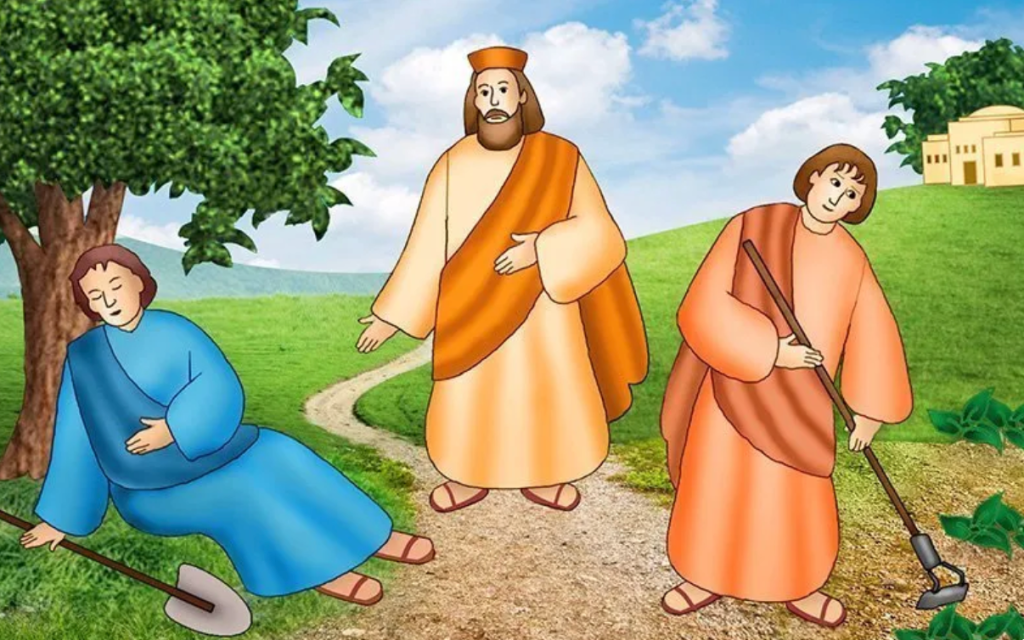
Gospel: Matthew 21:28-32
28 “But what do you think? A man had two [a]sons, and he came to the first and said, ‘[b]Son, go work today in the vineyard.’ 29 But he replied, ‘I do not want to.’ Yet afterward he regretted it and went. 30 And the man came to his second son and said the same thing; and he replied, ‘I will, sir’; and yet he did not go. 31 Which of the two did the will of his father?” They *said, “The first.” Jesus *said to them, “Truly I say to you that the tax collectors and prostitutes [c]will get into the kingdom of God before you. 32 For John came to you in the way of righteousness and you did not believe him; but the tax collectors and prostitutes did believe him; and you, seeing this, did not even [d]have second thoughts afterward so as to believe him.
Gospel Commentary:
The passage opens with a call to discernment (“What do you think?”). It presents a contrast between two sons given the same command by their father: “Son, go work today in the vineyard”.
- First Son: Refuses verbally, but undergoes an internal shift and goes to work.
- Second Son: Promises obedience, but fails to carry out the action.
Identities:
- The Father: God.
- The Vineyard: God’s kingdom and saving work in the world.
- The First Son: Represents tax collectors, prostitutes, and social outcasts who initially lived apart from the commandments of Moses but responded to John the Baptist’s call to repentance (“the way of righteousness”).
- The Second Son: Represents religious leaders who professed orthodoxy and structural loyalty to God but rejected the prophetic call to authentic conversion.
Theological Significance for Basic Ecclesial Communities (BECs)
For Basic Ecclesial Communities—this parable highlights three simple lessons:
- Faith is about action, not just labels: Calling yourself a Christian or holding a leadership title means little without real action. God measures faith by how we actually help others and serve our neighborhood.
- Welcoming those on the margins: The first son said “no” at first, but changed his mind. BECs must be patient and open to people who are “far” from the Church, struggling, or making mistakes—giving them space to turn around.
- Avoiding religious pride: Active church members can easily feel superior to non-churchgoers. This parable reminds BECs to stay humble, continually examine themselves,
Personal Reflection:
Where in my daily life am I acting like the second son—offering quick verbal agreements (“Yes, Lord”) to God’s promptings, yet failing to follow through in my actual decisions, relationships, or habits? What holds me back?
BEC Community Reflection:
As a neighborhood community, are our ministries and meetings genuinely welcoming to those who are distant, marginalized, or “late starters” in faith—or have we built an exclusive circle?
 We are the Basic Ecclesial Communities (BEC's) of the Parish of St. James the Great, Ayala Alabang Village. The BEC is a new way of being a church. We bring the church into the neighborhood by making Jesus and the Good News felt by our neighbors through Fellowship, Prayer, Outreach, and Formation activities.
Leave a comment