
The Parable of the Wedding Feast, 28th Sunday, October 11, 2026
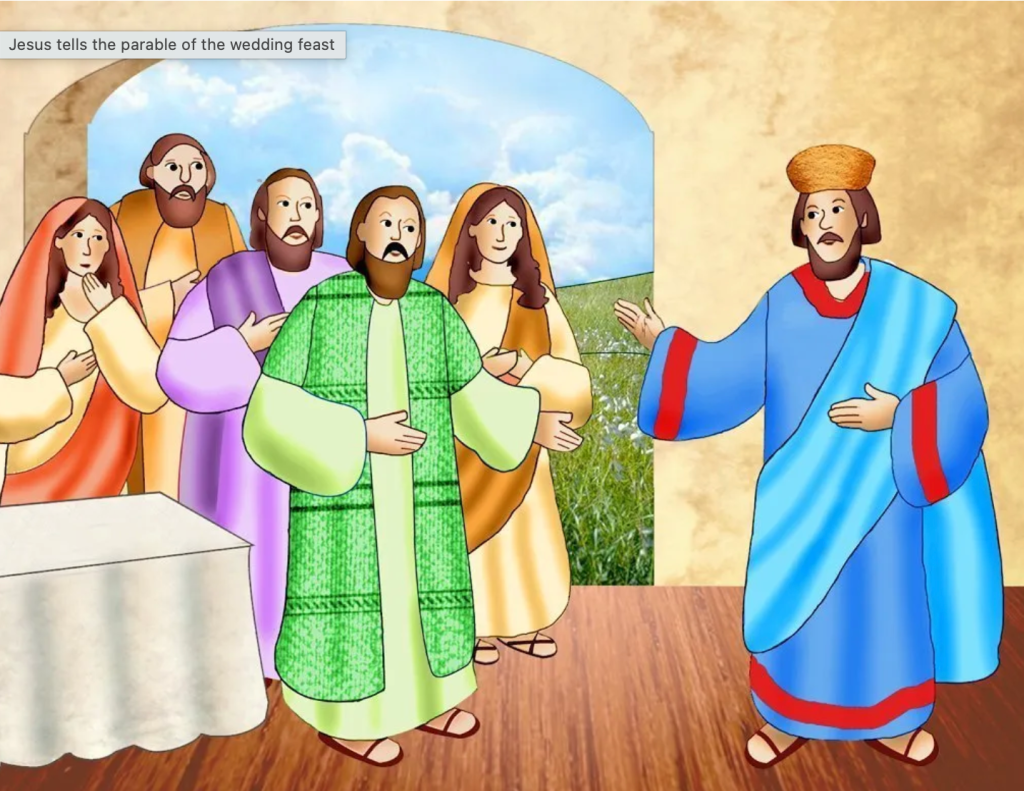
Gospel: Matthew 22:1-1
Jesus spoke to them again in parables, saying, 2 “The kingdom of heaven is like a king who held a wedding feast for his son. 3 And he sent his slaves to call those who had been invited to the wedding feast, and they were unwilling to come. 4 Again he sent other slaves, saying, ‘Tell those who have been invited, “Behold, I have prepared my dinner; my oxen and my fattened cattle are all butchered and everything is ready. Come to the wedding feast!”’ 5 But they paid no attention and went their separate ways, one to his own farm, another to his business, 6 and the rest seized his slaves and treated them abusively, and then killed them. 7 Now the king was angry, and he sent his armies and destroyed those murderers and set their city on fire. 8 Then he *said to his slaves, ‘The wedding feast is ready, but those who were invited were not worthy. 9 So go to the main roads, and invite whomever you find there to the wedding feast.’ 10 Those slaves went out into the streets and gathered together all whom they found, both bad and good; and the wedding hall was filled with dinner guests.
11 “But when the king came in to look over the dinner guests, he saw a man there who was not dressed in wedding clothes, 12 and he *said to him, ‘Friend, how did you get in here without wedding clothes?’ And the man was speechless. 13 Then the king said to the servants, ‘Tie his hands and feet, and throw him into the outer darkness; there will be weeping and gnashing of teeth in that place.’ 14 For many are called, but few are chosen.”
Gospel Commentary:
What is the Story About?
Jesus told a parable about a king who prepared a grand wedding feast for his son.
– The First Guests: The invited guests (the wealthy and powerful) refused to come because they were too busy with their farms and businesses. Some even mistreated and killed the king’s messengers.
– The New Guests: Angered, the king told his servants to go out to the streets and invite everyone they could find—rich or poor, good or bad—so the banquet hall would be filled.
– The Man Without a Wedding Garment: The king noticed a guest who wasn’t wearing proper clothing for the wedding. Because the man had no excuse, he was tied up and thrown into the darkness.
What Does This Mean for Our BEC?
1. God Chooses Those on the Margins
The first guests represent people who are too proud, busy, or closed-off to God.
The people invited from the streets represent ordinary folks. This reminds us that the BEC is a church of ordinary people, the poor, and the united. God values us no matter who we are.
2. An Open Invitation for Everyone
God’s invitation is free and open to all. His love excludes no one—as long as we are willing to respond to His call and join His family.
3. The “Wedding Garment” or a Changed Life
– Even though the invitation is free, it doesn’t mean we can live however we want. The wedding garment represents a genuine change of heart and lifestyle.
– As BEC members, we don’t just attend gatherings; we must wear the “garments” of kindness, love for our neighbors, and good deeds in our daily lives.
Reflection Questions:
1. For Personal Reflection
What are the “farms” or “businesses” in my daily life that make me too busy or distracted to truly respond to God’s invitation? Are there areas of my life where I am taking God’s grace for granted without letting it change how I live (my own “missing wedding garment”)?
2. For BEC Sharing (Ang Komunidad)
As a neighborhood community, how can we make our BEC feel more like an open, welcoming banquet table for those who feel judged, left out, or marginalized in our village or barangay—while still encouraging one another to live out true Christian values?


Leave a comment