
Parable of the Ten Virgins (Bridesmaids), 32nd Sunday, November 8, 2026
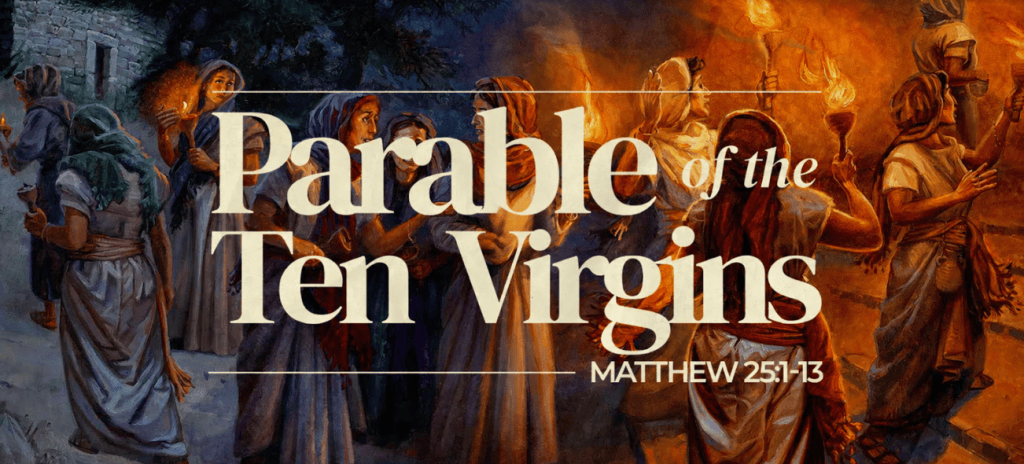
Gospel: Matthew 25:1-13
Jesus told his disciples this parable:
“The kingdom of heaven will be like ten virgins who took their lamps and went out to meet the bridegroom. Five of them were foolish and five were wise. The foolish ones, when taking their lamps, brought no oil with them, but the wise brought flasks of oil with their lamps. Since the bridegroom was long delayed, they all became drowsy and fell asleep.
At midnight, there was a cry, ‘Behold, the bridegroom! Come out to meet him!’ Then all those virgins got up and trimmed their lamps. The foolish ones said to the wise, ‘Give us some of your oil, for our lamps are going out.’ But the wise ones replied, ‘No, for there may not be enough for us and you. Go instead to the merchants and buy some for yourselves.’
While they went off to buy it, the bridegroom came and those who were ready went into the wedding feast with him. Then the door was locked. Afterwards the other virgins came and said, ‘Lord, Lord, open the door for us!’ But he said in reply, ‘Amen, I say to you, I do not know you.’ Therefore, stay awake, for you know neither the day nor the hour.”
Gospel Commentary:
The parable relies heavily on first-century Jewish wedding customs, where a bridegroom would travel to his bride’s home for a ceremony, followed by a nighttime procession back to his own home for the wedding banquet. The ten virgins (bridesmaids) are tasked with waiting for this procession to escort the couple to the feast with lit lamps.
Because he takes longer than expected, all ten virgins naturally fall asleep. The distinction between the “wise” and “foolish” virgins is not their wakefulness, but their reserve of oil. When the midnight cry rings out, the foolish virgins find their lamps dying and ask to borrow oil. The wise refuse, not out of selfishness, but because each lamp full of oil would burn only for a few hours. Had they done so, all ten lamps would have inevitably burned out before the slow nighttime procession reached the banquet. Their refusal was not a lack of charity; it was a necessity to ensure at least half the bridal party could fulfill their duty to light the way.
What is the message?
The early disciples expected Jesus to establish his kingdom and return almost immediately. By explicitly mentioning the “delay of the bridegroom,” Jesus warned them that his second coming (parousia) might take much longer than they anticipated, stretching across generations.
A delayed return naturally leads to fatigue—which is why all ten virgins fell asleep. Jesus knew that as time dragged on, the future church would face the temptation to become spiritually careless. The parable acts as a strict deterrent against spiritual procrastination.
While we are called to support each other in our faith journey, you are ultimately responsible for keeping your own heart prepared. You have to actively tend to your own spiritual life so you are ready to join the celebration when the time comes.
Reflection Questions:
Personal – If my spiritual “oil” is my personal connection with God, what specific daily worry or habit is draining it the fastest right now? What is one concrete action I can take tomorrow—like praying for five minutes before checking my phone or reading a single Bible verse over morning coffee—to refill my own tank?
Community (BEC) Reflection: Checking on the Neighbors. What is one simple, everyday way we can check on a neighbor whose “oil” might be running low—like sending a quick text to someone who missed our last gathering, or offering to help a struggling family with a heavy errand?


Leave a Reply